This article was first published in the April 2017 issue of Mojeh magazine
Syria is a nation renowned to encompass a rich history, spanning from Mesopotamian, Greek and Roman to Byzantine, Ottoman and Arabic civilizations. The country has experienced its share of political turmoil, most recently with the conflict spurned from the Arab Spring protests in 2011. The initial sense of optimism soon led to a wave of disenchantment, followed by disintegration and the displacement of civilians. In light of the uprising, a series of institutions have shed light on the culture and history of Syria in the UAE and abroad. Recent exhibitions by the Atassi Foundation and Ayyam Gallery in Dubai including the Aga Khan Museum in Toronto have played an instrumental role in preserving and showcasing Syrian art. Following the recognition which these exhibitions have received, Art Dubai and Alserkal Avenue joined forces during Dubai’s Art Week in March to host the panel talk, Syria Calling which discussed the Syrian art scene and efforts towards safe-guarding art from the war-torn nation.
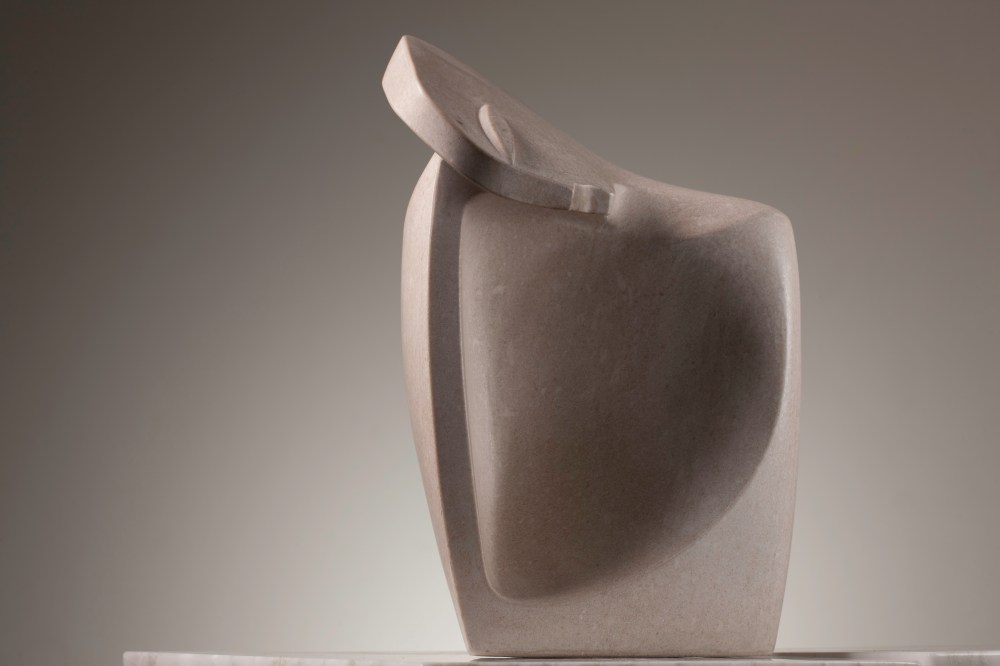 Lutfi Al Romhein. Untitled. Marble. 45 x 30 x 17 cm. 1996. The Atassi Foundation
Amidst the warehouses of Alserkal Avenue in Dubai lies Concrete. The structure’s striking monochromatic façade and gliding internal walls marks a historic milestone for the UAE’s cultural landscape. Conceived by the Office for Metropolitan Architecture (OMA), the multi-disciplinary venue is the first project resurrected by the avant-garde design practice in the UAE. To commemorate the inauguration of Concrete, the Atassi Foundation, a non-profit organisation which aims to preserve and promote Syrian art and culture showcased the exhibition, Syria: Into the Light until April 3, 2017. Curated by one of the founders of the Atassi Foundation, Mouna Atassi in collaboration with the writer and curator Rasha Salti, Syria: Into the Light is the foundation’s largest art exhibition to date. Based on the theme of portraits and figures, the showcase surveys over 60 works by artists illustrating Syria’s heritage and culture spanning from the early 20th century to the present day. Key artworks from pioneering masters such as Fateh Moudarres, Elias Zayat and Louay Kayyali chronicle Syria’s history and provide an insight into colloquial life. While works from a new wave of contemporary artists such as Hiba Al Ansari and Jaber Al Azmeh convey political undertones. One of the leading forces behind maintaining Syria’s cultural legacy is the Atassi Foundation’s Director, Shireen Atassi. “This is a message of optimism,” Atassi insists. She asserts that extremist Islamic organisations do not represent Syria’s identity. “This is the real face of Syria. The conflict does not represent us.” She adds, “What really matters to us is showcasing the art and culture of Syria. The entire foundation is based on that premise.”
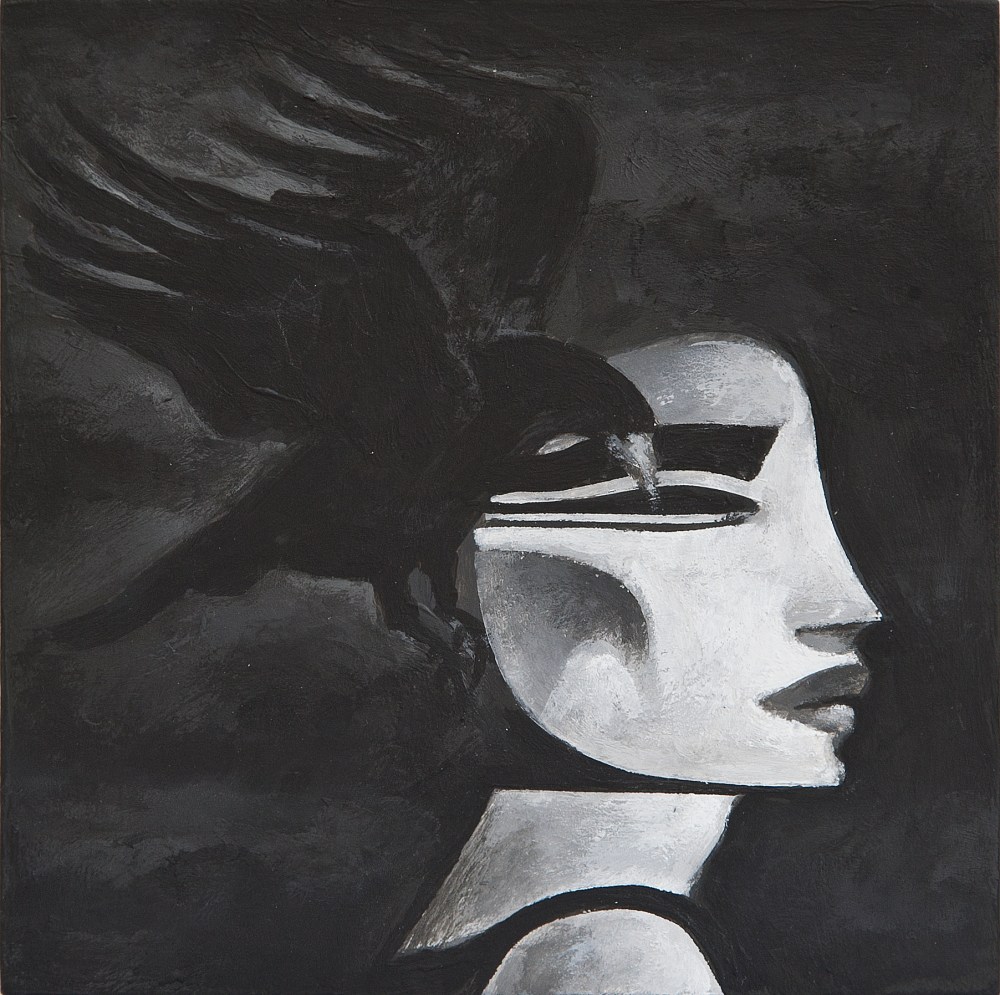 Safwan Dahoul. Dream 120. 2016. Acrylic on wood. 13 x 13cm. Ayyam Gallery Dubai
Steps away from Concrete, lies Alserkal Avenue’s first tenant, Ayyam Gallery. Renowned to have revived interest in Syria’s contemporary art scene, the gallery was initially established in Damascus by the art collectors and cousins, Hisham and Khaled Samawi. Ayyam Gallery’s co-founder Khaled Samawi conveys how the gallery played a pivotal role in providing a platform for underrepresented Syrian artists. “We focused on filling this void through exhibitions and multilingual publications,” he says. “Inviting writers, historians and critics to contextualize our artists, and Syrian art history in general.” He adds, “Within a few years, the benefits of investing in our artists with such intensity became clear. Today, Syrian art is widely known internationally.” Due to Syria’s escalating crisis in 2012, majority of the artworks and staff from the Damascus division relocated to Ayyam Gallery’s Dubai branch. The gallery has continued to showcase Syria’s most notable artists, from Tammam Azzam to Safwan Dahoul. Considered one of Syria’s most eminent contemporary artists, Dahoul recently showcased Miniatures, a continuation of his Dream series at Ayyam Gallery. Although small in scale, the canvases from Miniatures profoundly evoke the female protagonist’s solitude, contorted body and hollow eyes. Dahoul insists that the female figure in his Dream series does not directly reflect the upheaval in Syria, as she narrates his personal experiences. “At the end of the day,” he reflects, “I am part of this community, and will be affected in some way.” In terms of how the art scene has been affected by the conflict in Syria, Dahoul says that he has not seen adequate results reflected in art. “I haven’t yet seen anything that matches the size of the turmoil itself,” he notes. “All the artists are still only touching upon the peripheries of the turmoil, mainly the humanitarian part. We will need to wait a bit longer and I think we’ll see more.”
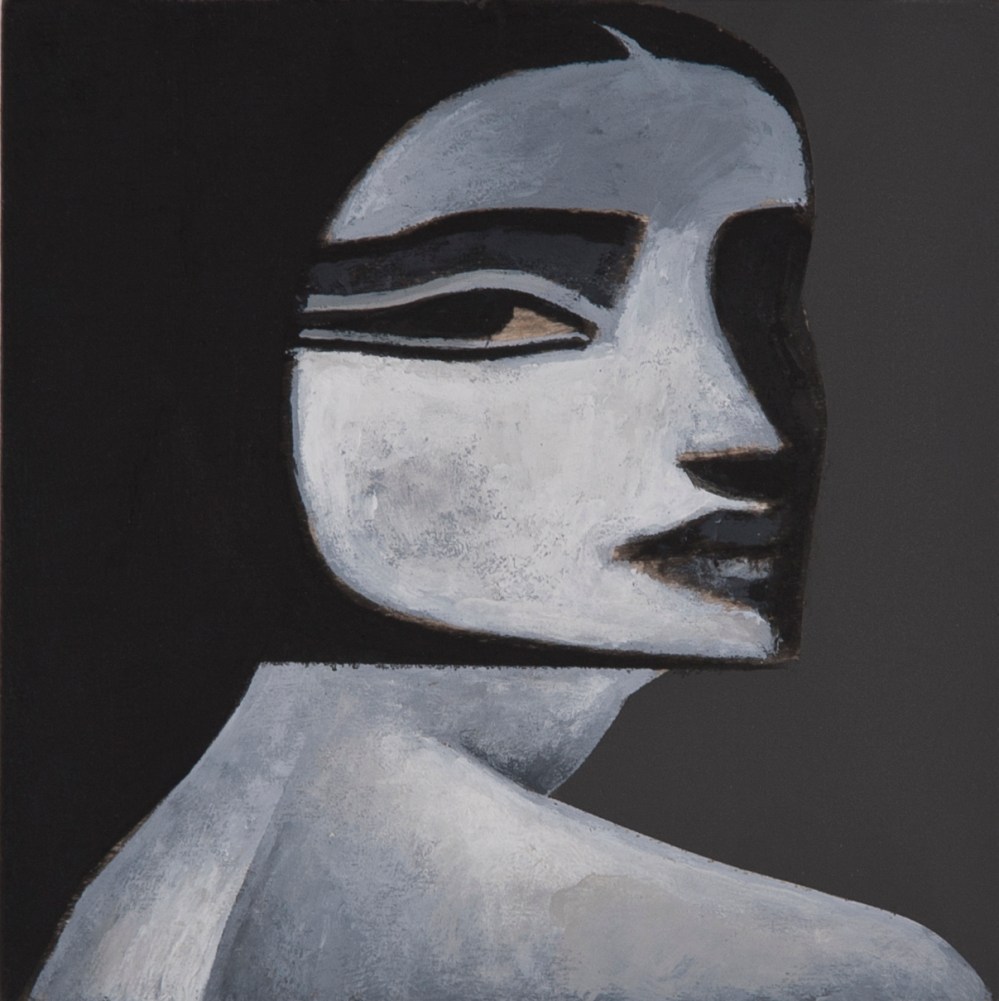 Safwan Dahoul. Dream 139. 2016. Acrylic on wood. 10 x 10cm. Ayyam Gallery
Overseas, the Aga Khan Museum in Toronto, Canada showcased a survey of Syria’s art and historic artefacts in the exhibition, Syria: A Living History which ran until March 26, 2017. Revealing over 5,000 years of Syria’s artefacts and artworks, the exhibition aimed to enlighten the public’s perceptions about Syria’s past and present. On what compelled the museum to showcase Syria: A Living History, the exhibition’s co-curator, Filiz Çakir Phillip states, “After seeing and hearing the news about the Syrian crisis, there was much concern over how the cultural artefacts of the country would be affected.” She adds, “There was an impression from the public that everything had been destroyed and there were no artists working in Syria.” Subsequently, Syria: A Living History showcased artefacts from ancient civilisations in Syria, including several contemporary artworks from the Atassi Foundation on view for the first time in North America. Of note, was the multi-layered composition displayed by the entrance of the exhibition entitled, Deluge: The Gods Abandon Palmyra by the influential Syrian artist Elias Zayat, who is based in Damascus. Renowned as one of the leaders of Syria’s modern art movement, Fateh Moudarres’ The Last Supper was displayed alongside key contemporary works such as Tammam Azzam’s Freedom Graffiti, which imposed Gustav Klimt’s iconic work, The Kiss over the façade of a war-torn building in Syria. Among the ancient artefacts showcased included a carved eye idol which dates back to around 3,200 BC and was believed to offer spiritual protection. Another key insight into Syria’s history was illustrated through a digital reproduction of an intricately carved niche which revealed the model of a house in Damascus in the 16th century. “Syria: A Living History allows us to delve into the lives and histories of Syrian people, their diversity and the intricacies of their situations,” explains the Director and CEO of the Aga Khan Museum, Henry Kim. He continues, “It allows us to empathise with Syrians, connect with their experiences, and to do so despite thousands of miles between us.”
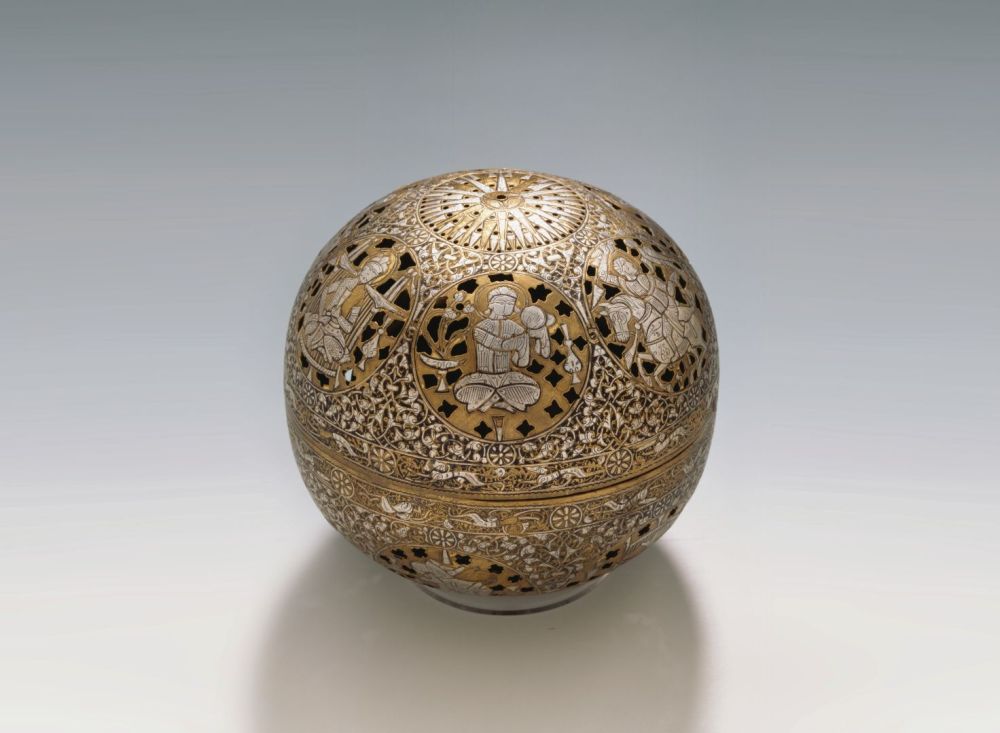 13-th century Syrian incense burner. The Aga Khan Museum
Following the recognition received by the Aga Khan Museum and the Atassi Foundation to preserve and promote Syrian art, Shireen Atassi, the foundation’s Director, organised the panel discussion Syria Calling which was held by the Art Dubai Modern Symposium during Art Week in March at Alserkal Avenue. Hosted by the Aga Khan Museum’s Director and CEO Henry Kim and the Syrian artist, Elias Zayat, the panel aimed to provide an overview of Syria’s cultural scene and an insight into one of Zayat’s most compelling compositions, Deluge: The Gods Abandon Palmyra. Prior to the panel discussion, Henry Kim expressed his admiration for the artist’s oeuvre. “Zayat is one of the greatest contemporary painters of modern and contemporary art in Syria,” notes Kim. He adds, “The power of the Deluge is incredible.” Zayat’s mural draws inspiration from historic accounts of the flood, depicted in the Epic of Gilgamesh, the Old Testament and the Qur’an. The artwork’s setting in Palmyra, Syria is presented as a site of resistance amidst destruction. As an artist who continues to live and work in Damascus, Zayat recounts the cultural scene in the capital prior to the conflict. “Before this war we had galleries, we had a good movement of art in Damascus,” recalls the artist. Zayat believes more time is needed to see the full effect of the conflict on any key artistic movement. “We have to wait and see the influence of this situation over paintings and other art,” he says. The artist’s son, Michel Zayat, a Dubai-based architect who is currently working on hotel projects in Damascus, asserts that residents in Syria’s capital continue to carry on living. “The media tends to focus allot on refugees, war and regimes,” he says. “But there is not only a cultural scene but a social scene underneath. People are there, working on something and preparing for the next phase.” Although the outskirts of the capital remain in turmoil, the architect believes that the conflict will take time to settle down. “There are people who live there, and want to survive and move forward,” he insists.
Syria’s culture and history continues to be recognised through the preservation and showcases of the nation’s art and historic artefacts. The powerful visual language of art can facilitate dialogue and enlighten society. “Art can allow us to change how we assess and identify with a situation,” explains Kim. “When it comes to Syria, I hope the art featured here gave people access to a different story, one not covered by popular media – a story of a region that is diverse, resourceful and resilient.” – Nada Bokhowa
 The Desert Rose